Benefits and Challenges of Outsourcing Creative Works
Posted on : May 22, 2025
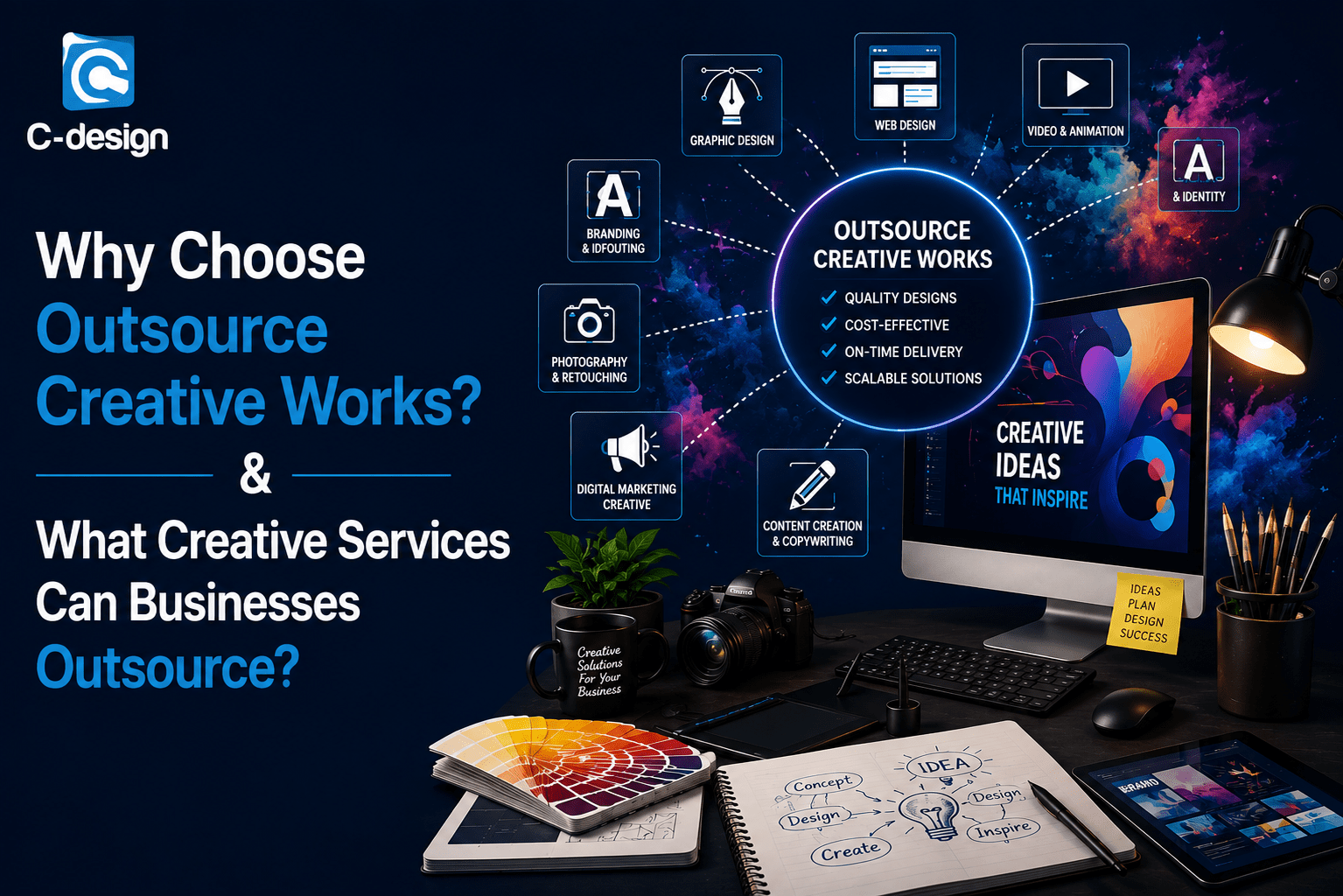
In the dynamic global economy of 2025, businesses are constantly seeking innovative strategies to optimize operations, access specialized talent, and gain a competitive edge. This pursuit has increasingly led to the widespread adoption of outsourcing, a practice that extends far beyond traditional IT and manufacturing to encompass a vast array of creative works. From graphic design and video editing to content writing, 3D modeling, animation, and even strategic branding, creative outsourcing is no longer a nascent trend but a well-established and evolving facet of how organizations build, market, and tell their stories.

For businesses and creative agencies in a vibrant and rapidly developing region like Thrissur, Kerala, the decision to outsource creative work presents both tantalizing opportunities and unique complexities. Kerala, with its rich cultural heritage, strong educational infrastructure, and growing pool of digital talent, is both a potential consumer and a significant provider of outsourced creative services. Understanding the nuances of this landscape is crucial for strategic decision-making.
This comprehensive blog will delve deep into the multifaceted benefits and challenges of outsourcing creative works in 2025, with a particular focus on the implications and experiences for businesses operating from or engaging with creative talent across the world. We will explore the compelling advantages that drive firms to look beyond their in-house capabilities, the inherent hurdles and risks that must be meticulously managed, best practices for successful outsourcing partnerships, and the future trends shaping this crucial aspect of the global creative economy.
Why Businesses Outsource Creative Works in 2025
The decision to outsource creative projects is driven by a potent combination of strategic advantages that address common pain points for businesses and creative agencies:
- Cost Optimization:
- Reduced Overhead: Outsourcing creative work often translates to significant savings on salaries, employee benefits, office space, specialized software licenses, and hardware maintenance. This is particularly attractive for startups and Small and Medium Enterprises (SMEs) in Thrissur seeking to allocate resources efficiently, allowing them to stretch their budgets further and invest in other critical areas of their business.
- Access to Competitive Rates: Different regions and countries have varying cost structures. Outsourcing to regions with lower labor costs, such as various parts of India (including outside major metros), can provide access to high-quality creative output at a more competitive price point compared to Western markets. For a Thrissur firm, this might mean outsourcing certain specialized tasks to smaller towns within Kerala or other states in India where talent is available at a more accessible rate. Conversely, for international clients, engaging with Kerala-based agencies offers a compelling value proposition of high-quality work at globally competitive, yet domestically affordable, rates.
- Project-Based Billing and Variable Costs: Firms can pay for creative services on a project-by-project or task-by-task basis, eliminating the fixed costs associated with a full-time in-house creative team. This converts what would typically be a fixed expenditure into a variable one, offering greater financial flexibility and predictability in budgeting, especially useful when creative demands fluctuate.
- Reduced Overhead: Outsourcing creative work often translates to significant savings on salaries, employee benefits, office space, specialized software licenses, and hardware maintenance. This is particularly attractive for startups and Small and Medium Enterprises (SMEs) in Thrissur seeking to allocate resources efficiently, allowing them to stretch their budgets further and invest in other critical areas of their business.
- Access to Specialized Talent and Diverse Skillsets:
- Niche Expertise: Creative fields are increasingly specialized. Outsourcing allows firms to instantly access niche expertise (e.g., hyper-realistic character animation for games, intricate architectural visualization, technical writing for specific industries, multi-lingual content creation, AR/VR content development) that might be unavailable, prohibitively expensive, or difficult to maintain as a full-time in-house role. A Thrissur-based architectural firm, for instance, might need a specialist in advanced parametric modeling for a unique façade, which they could outsource to a studio specializing in that very specific domain, regardless of their location.
- Global Talent Pool: The internet and advanced communication technologies have effectively flattened the world, providing access to a vast and diverse global talent pool. This means businesses in Thrissur are no longer limited by local availability; they can collaborate with world-class illustrators in Europe, expert video editors in North America, or specialized 3D modelers in other parts of Asia, all from their office in Kerala. Conversely, the unique artistic sensibilities and technical skills found within Kerala’s creative community are increasingly accessible to international clients.
- Diverse Perspectives and Creative Styles: Engaging with creative professionals from different cultural backgrounds, educational systems, and artistic traditions can inject fresh perspectives, unique artistic styles, and innovative approaches into projects. This leads to more dynamic, globally appealing, and culturally relevant results. Kerala’s own rich cultural tapestry, with its vibrant art forms and traditional aesthetics, can offer distinctive creative insights for outsourced projects, particularly for those seeking authentic Indian or South Indian cultural representation.
- Niche Expertise: Creative fields are increasingly specialized. Outsourcing allows firms to instantly access niche expertise (e.g., hyper-realistic character animation for games, intricate architectural visualization, technical writing for specific industries, multi-lingual content creation, AR/VR content development) that might be unavailable, prohibitively expensive, or difficult to maintain as a full-time in-house role. A Thrissur-based architectural firm, for instance, might need a specialist in advanced parametric modeling for a unique façade, which they could outsource to a studio specializing in that very specific domain, regardless of their location.
- Scalability and Flexibility:
- Meeting Fluctuating Demands: Creative workload often fluctuates dramatically depending on project pipelines, client acquisition, and market trends. Outsourcing provides unparalleled agility to quickly scale creative capacity up or down based on sudden project surges, seasonal peaks (e.g., festive advertising campaigns in Kerala), or tight deadlines. This eliminates the logistical and financial challenges of hiring, training, and potentially laying off permanent staff, offering a more responsive business model. This adaptability is crucial for agencies in Thrissur managing varied and unpredictable client portfolios.
- Faster Project Turnaround (“Follow-the-Sun” Model): For global projects, outsourcing to teams in different time zones can enable a “follow-the-sun” workflow. While one team finishes their workday, another in a different time zone can pick up the project, allowing creative work to continue virtually 24/7. This significantly accelerates project turnaround times, enabling businesses to meet aggressive deadlines and bring products or campaigns to market faster.
- Quick Project Starts: Outsourced teams, especially established agencies or experienced freelancers, can often be onboarded and begin work much faster than recruiting, interviewing, hiring, and training new in-house employees, which can be a lengthy and resource-intensive process.
- Meeting Fluctuating Demands: Creative workload often fluctuates dramatically depending on project pipelines, client acquisition, and market trends. Outsourcing provides unparalleled agility to quickly scale creative capacity up or down based on sudden project surges, seasonal peaks (e.g., festive advertising campaigns in Kerala), or tight deadlines. This eliminates the logistical and financial challenges of hiring, training, and potentially laying off permanent staff, offering a more responsive business model. This adaptability is crucial for agencies in Thrissur managing varied and unpredictable client portfolios.
- Focus on Core Competencies and Strategic Growth:
- By strategically offloading routine, repetitive, or highly specialized creative production tasks to external experts, businesses can free up their invaluable in-house teams. This allows core personnel – whether they are creative directors, strategic planners, client relationship managers, or senior architects – to concentrate their time, energy, and expertise on higher-value activities. This includes strategic creative direction, client relationship management, business development, market analysis, and fostering a culture of innovation. For an architectural firm in Thrissur, outsourcing 3D renderings and walkthroughs allows their architects to dedicate more time to design innovation, client communication, and regulatory compliance.
- By strategically offloading routine, repetitive, or highly specialized creative production tasks to external experts, businesses can free up their invaluable in-house teams. This allows core personnel – whether they are creative directors, strategic planners, client relationship managers, or senior architects – to concentrate their time, energy, and expertise on higher-value activities. This includes strategic creative direction, client relationship management, business development, market analysis, and fostering a culture of innovation. For an architectural firm in Thrissur, outsourcing 3D renderings and walkthroughs allows their architects to dedicate more time to design innovation, client communication, and regulatory compliance.
- Risk Mitigation and Reduced Operational Burden:
- Outsourcing can effectively transfer certain operational risks associated with maintaining a creative department. This includes managing specialized creative software licenses (which can be very expensive), hardware procurement and maintenance, keeping up with rapid technological obsolescence, and the challenge of retaining highly skilled staff. The outsourcing provider specializes in these areas, bearing the burden of investment and management.
- It also reduces the administrative load related to human resources, such as recruitment, payroll, and benefits administration for creative staff.
- Outsourcing can effectively transfer certain operational risks associated with maintaining a creative department. This includes managing specialized creative software licenses (which can be very expensive), hardware procurement and maintenance, keeping up with rapid technological obsolescence, and the challenge of retaining highly skilled staff. The outsourcing provider specializes in these areas, bearing the burden of investment and management.
- Benchmarking and Access to Best Practices:
- Reputable outsourcing partners, particularly specialized creative studios, often bring industry best practices, established workflows, rigorous quality control processes, and a wealth of experience from working with diverse clients to the table. This can elevate the overall standard of creative output for the client firm and potentially introduce them to more efficient or innovative creative methodologies.
- Reputable outsourcing partners, particularly specialized creative studios, often bring industry best practices, established workflows, rigorous quality control processes, and a wealth of experience from working with diverse clients to the table. This can elevate the overall standard of creative output for the client firm and potentially introduce them to more efficient or innovative creative methodologies.
Challenges and Risks of Outsourcing Creative Works

While the benefits are compelling, outsourcing creative works is not without its complexities and potential pitfalls. Careful consideration, proactive management, and clear communication are absolutely essential to mitigate these challenges:
- Communication Barriers (The Most Critical Challenge):
- Language Differences and Nuance: Even with English as a common business language (widely spoken in Kerala’s professional circles), subtle nuances, idioms, slang, and cultural connotations can lead to significant misunderstandings, especially in creative briefs that are inherently subjective and rely heavily on implicit understanding. A slight misinterpretation of a mood board or a descriptive adjective can lead to a vastly different creative outcome. This can be a challenge when a Thrissur firm works with a non-English speaking partner or vice-versa, or even with English speakers where regional dialects influence interpretation.
- Time Zone Differences: While beneficial for accelerating workflows, significant time zone differences (e.g., Thrissur vs. North America) can complicate real-time collaboration, live feedback sessions, and urgent queries. This necessitates careful scheduling and reliance on asynchronous communication methods.
- Cultural Nuances and Context: Understanding the cultural context is absolutely crucial for effective creative work, particularly in areas like advertising, branding, and content creation. A design, message, or character portrayal that resonates positively in one culture might be misinterpreted, misunderstood, or even offensive in another. For a Thrissur agency, ensuring an outsourced team (especially an international one) understands local sensitivities, consumer behavior, and cultural aesthetics for a campaign targeting Kerala or India is paramount. Conversely, a Kerala-based agency outsourcing to a Western market needs to adapt its cultural understanding.
- Loss of Non-Verbal Cues and Spontaneity: Remote communication, even via video calls, inherently lacks the richness of in-person interaction. It’s harder to gauge understanding, enthusiasm, subtle creative direction through body language, or to have spontaneous brainstorming sessions that often spark creative breakthroughs.
- Language Differences and Nuance: Even with English as a common business language (widely spoken in Kerala’s professional circles), subtle nuances, idioms, slang, and cultural connotations can lead to significant misunderstandings, especially in creative briefs that are inherently subjective and rely heavily on implicit understanding. A slight misinterpretation of a mood board or a descriptive adjective can lead to a vastly different creative outcome. This can be a challenge when a Thrissur firm works with a non-English speaking partner or vice-versa, or even with English speakers where regional dialects influence interpretation.
- Quality Control and Artistic Alignment (The Subjective Hurdle):
- Subjectivity of Creative Work: Unlike quantifiable data or code, creative output is inherently subjective. Ensuring the outsourced team consistently delivers work that precisely aligns with the client’s often abstract artistic vision, brand guidelines, and highly specific quality expectations can be a persistent challenge. What one person considers “bold” another might find “overpowering.”
- Maintaining Brand Consistency: Ensuring that outsourced creative work adheres strictly to established brand guidelines, tone of voice, visual identity, and aesthetic standards across all touchpoints (e.g., website, social media, print ads) can be difficult without robust oversight, leading to a fragmented brand image.
- Iterative Feedback Loop Management: Managing iterative feedback cycles with a remote team can be time-consuming, frustrating, and potentially lead to scope creep if expectations are not clearly set, feedback is not precise, or if the outsourced team struggles to interpret complex artistic direction. The sheer volume of revisions can negate initial cost savings.
- Subjectivity of Creative Work: Unlike quantifiable data or code, creative output is inherently subjective. Ensuring the outsourced team consistently delivers work that precisely aligns with the client’s often abstract artistic vision, brand guidelines, and highly specific quality expectations can be a persistent challenge. What one person considers “bold” another might find “overpowering.”
- Intellectual Property (IP) Protection and Security (The Legal Minefield):
- Data Confidentiality and Security Breaches: Sharing sensitive brand information, unreleased product designs, proprietary software details, or confidential marketing strategies with external teams raises legitimate concerns about data confidentiality and the risk of security breaches.
- Intellectual Property Ownership: Clearly defining and legally documenting ownership of all intellectual property created by the outsourced team is paramount. Ambiguity in contracts can lead to costly legal disputes over rights, usage, and future monetization. This is a critical legal aspect that needs careful drafting in agreements, especially for international collaborations involving different legal frameworks.
- Digital Asset Management and Transfer: Securely transferring, storing, and managing large, often proprietary, creative files across geographical locations requires robust and secure digital asset management systems and protocols.
- Data Confidentiality and Security Breaches: Sharing sensitive brand information, unreleased product designs, proprietary software details, or confidential marketing strategies with external teams raises legitimate concerns about data confidentiality and the risk of security breaches.
- Integration and Workflow Issues (The Operational Friction):
- Onboarding and Training Investment: Effectively onboarding an outsourced creative team to truly understand the client’s brand ethos, existing creative assets, preferred tools, internal processes, and established workflows can be a significant initial investment of time and resources, which might not be immediately recouped.
- Tool and Software Compatibility: Ensuring seamless compatibility of software versions, file formats, plugins, and project management tools between the in-house and outsourced teams is essential for efficient collaboration and avoiding conversion issues or workflow disruptions.
- Pipeline Disruption: Integrating an external team into an existing in-house creative pipeline can sometimes lead to inefficiencies, bottlenecks, or friction if workflows are not meticulously planned, communicated, and adapted.
- Resource Management: Ensuring that the outsourced team has access to all necessary resources (fonts, brand guidelines, existing assets, client logins) in a secure and timely manner.
- Onboarding and Training Investment: Effectively onboarding an outsourced creative team to truly understand the client’s brand ethos, existing creative assets, preferred tools, internal processes, and established workflows can be a significant initial investment of time and resources, which might not be immediately recouped.
- Loss of Control and Oversight (The Trust Factor):
- Reduced Direct Supervision: Clients naturally have less direct, day-to-day oversight over an outsourced team compared to an in-house one. This requires a greater degree of trust in the partner’s professionalism and reliance on robust reporting mechanisms, clear milestone tracking, and self-discipline from the outsourced team.
- Dependence on External Partner: Over-reliance on a single outsourcing partner can create a single point of failure. If the relationship sours, the partner faces internal issues (e.g., staff turnover, financial distress), or their quality drops, it can severely impact project timelines and overall business continuity.
- Potential for Misalignment of Values: While not always a deal-breaker, fundamental differences in work ethic, communication styles, or creative philosophies can lead to friction over time.
- Reduced Direct Supervision: Clients naturally have less direct, day-to-day oversight over an outsourced team compared to an in-house one. This requires a greater degree of trust in the partner’s professionalism and reliance on robust reporting mechanisms, clear milestone tracking, and self-discipline from the outsourced team.
The Evolving Landscape: Future Trends in Creative Outsourcing (2025 and Beyond)
The future of outsourcing creative works is shaped by several powerful and interconnected trends, promising both new opportunities and complexities:
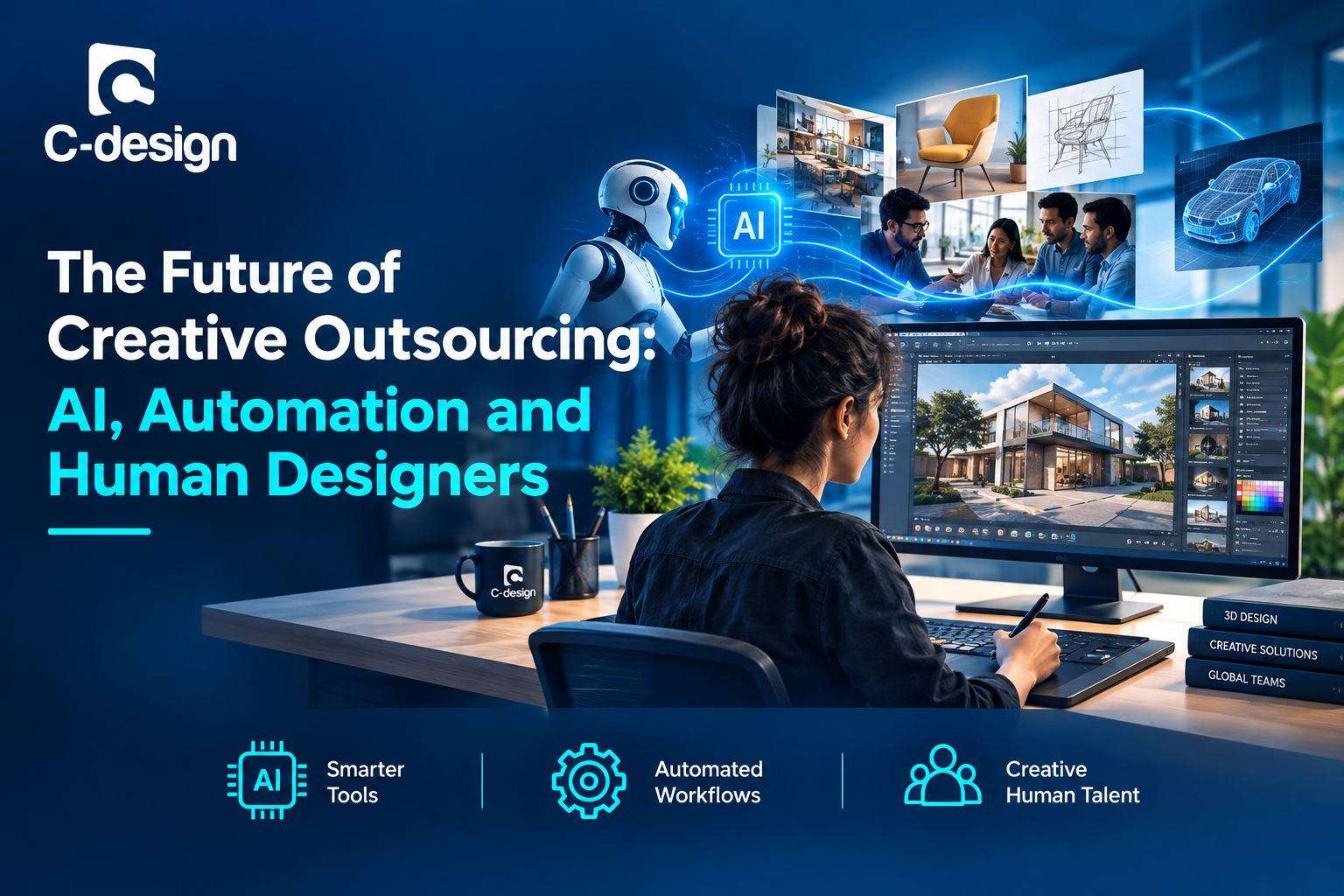
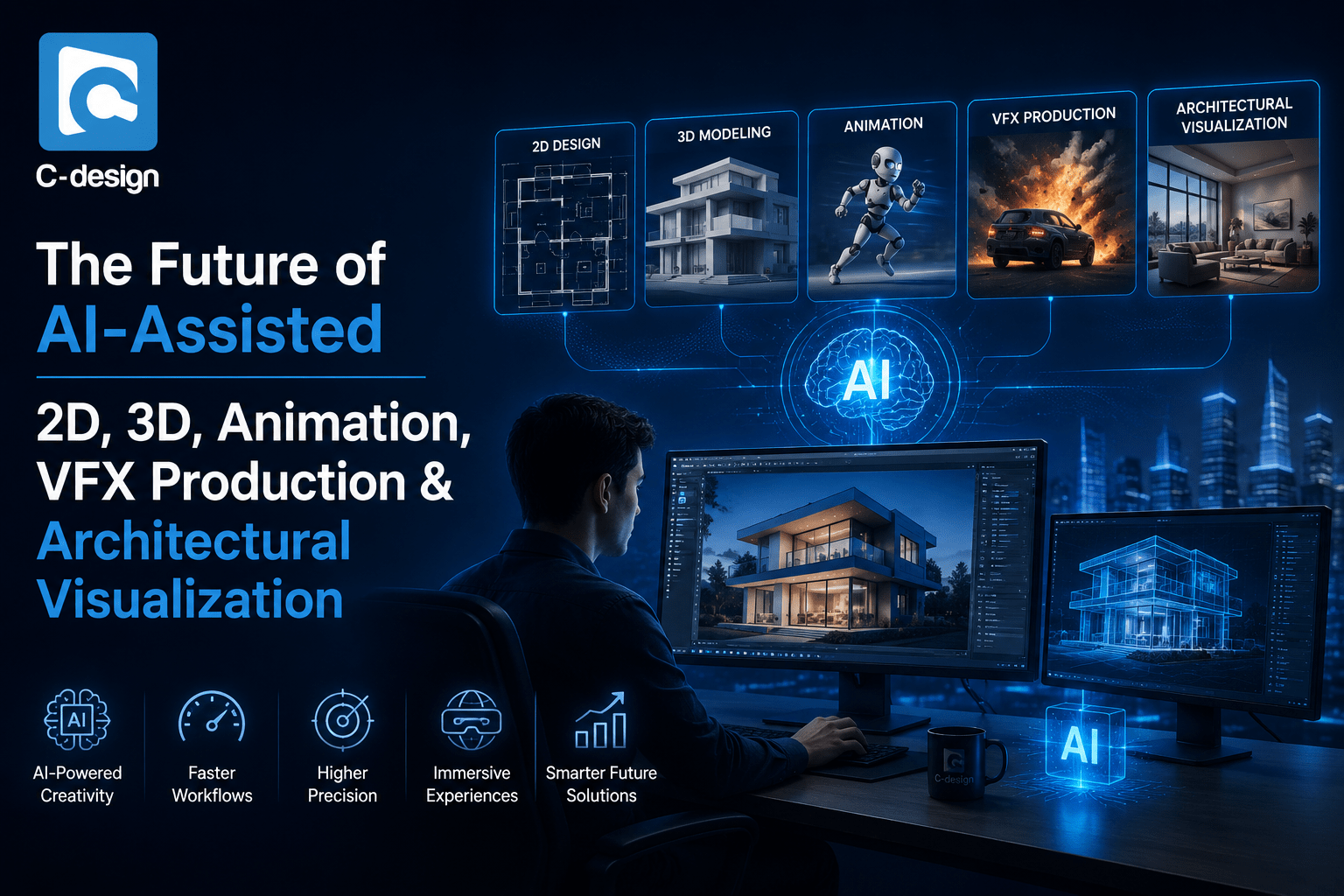
- AI Augmentation, Not Replacement, in Creative Production: AI tools are rapidly moving beyond simple automation to directly assisting with various facets of creative production. This includes:
- Generative AI for Initial Concepts: AI generating preliminary creative concepts, mood boards, or even basic drafts (e.g., initial blog outlines, rough 3D model base meshes, simple video cuts) from text prompts.
- Automated Optimization: AI streamlining tedious tasks like image scaling, basic color correction, video stabilization, or automated retopology and UV unwrapping for 3D models.
- Personalized Content at Scale: AI enabling the creation of hyper-personalized creative content variations for individual users or specific market segments, a task too vast for human teams alone.
- This will free up human creatives, including outsourced teams, to focus on higher-level conceptualization, strategic thinking, complex problem-solving, artistic refinement, and injecting unique humanistic flair. The demand for creative professionals who are adept at “prompt engineering” and leveraging AI tools will grow exponentially.
- Generative AI for Initial Concepts: AI generating preliminary creative concepts, mood boards, or even basic drafts (e.g., initial blog outlines, rough 3D model base meshes, simple video cuts) from text prompts.
- Hyper-Specialization and Niche Expertise: The demand for highly specialized creative skills will intensify. This includes experts in niche areas like:
- Metaverse environment artists and avatar creators for specific platforms.
- Technical artists who bridge the gap between art and code.
- Cinematic VFX specialists for game cutscenes and virtual productions.
- Interactive storytellers for new digital experiences.
- AI prompt engineers for generating specific creative outputs.
- Outsourcing will become even more critical for accessing these highly specific and in-demand talents, regardless of their geographical location.
- Blockchain for IP and Authenticity (Web3 and NFTs): Blockchain technology is poised to play a significant role in securing intellectual property rights, tracking asset provenance, and ensuring authenticity for digital creative works, particularly with the rise of non-fungible tokens (NFTs). This offers new avenues for creators to monetize their work and for clients to verify ownership and originality of outsourced assets.
- More Immersive Virtual Collaboration Platforms: As VR/AR technologies mature, more sophisticated virtual collaboration tools will enable truly immersive and intuitive remote creative workshops, brainstorming sessions, and feedback reviews. Teams can “meet” in a virtual space to discuss 3D models, review video edits, or refine designs in a more natural and engaging way, further bridging geographical distances.
- Data-Driven Creative Optimization and Performance Analytics: The integration of robust data analytics and AI will allow for more data-driven creative decisions. Outsourced teams will increasingly leverage these insights to optimize their creative output for specific target audiences, engagement metrics, conversion rates, and overall campaign performance. This shifts the focus from just “looks good” to “performs well.”
- Emergence of “Creative Hubs” in Developing Nations (Thrissur’s Role): Regions like Kerala, with its strong educational infrastructure (producing skilled graduates in design, animation, and IT), government support for digital initiatives (e.g., Kerala Startup Mission), and a relatively lower cost of living compared to major global creative centers, will continue to grow as significant hubs for high-quality outsourced creative services. Thrissur’s existing creative and academic ecosystem (e.g., Government College of Fine Arts, various animation and multimedia training institutes) positions it exceptionally well to contribute skilled talent to this global creative economy, attracting international clients looking for both quality and value.
- Hybrid Models and “Blended Teams” Becoming Standard: The future will likely see a greater adoption of hybrid creative models. Core strategic and conceptual work, brand guardianship, and high-level creative direction will typically remain in-house. However, large-scale production, specialized technical tasks, overflow work, or multi-platform adaptations will be seamlessly managed by outsourced “blended teams” who are integrated as true partners rather than mere vendors.
- Ethical AI and Bias in Creative Content: As AI becomes more prevalent in creative generation, ethical considerations around AI bias (e.g., unintended stereotypes in character generation), intellectual property implications of AI-generated content, and the responsible and transparent use of AI will become increasingly important for both clients and outsourced providers to navigate.
Conclusion: The Strategic Imperative of Creative Outsourcing in 2025
In the complex and fiercely competitive business environment of 2025, outsourcing creative works is no longer a peripheral option but a strategic imperative for organizations seeking unparalleled agility, significant cost-effectiveness, and instant access to world-class, specialized talent. For businesses and creative agencies nestled in the vibrant cultural hub of Thrissur, Kerala, this dynamic means both the immense opportunity to leverage global expertise for their local and regional projects and the burgeoning potential to contribute their unique creative talents and cultural insights to the international stage.
While challenges undeniably exist, ranging from subtle communication nuances to the complexities of quality control and iron-clad intellectual property protection, these hurdles are entirely surmountable with meticulous planning, robust processes, advanced technological tools, and a genuine commitment to fostering transparent, collaborative, and long-term partnerships. By viewing outsourcing not as a mere cost-cutting measure but as a powerful strategic enabler of innovation, scalability, and sustainable growth, firms can confidently navigate the creative crossroads. As technology continues its relentless march forward, making remote collaboration ever more seamless and artificial intelligence ever more powerful, the role of outsourced creative works will only continue to expand, fundamentally shaping the visual, narrative, and experiential landscape of our global digital future, with the vibrant and talented creative minds from Thrissur, Kerala, playing an increasingly integral and recognized part in this profound global transformation.
Related Blogs
Art assets in different styles like 2D art for interactive applications, Games, and UI. We are having more than 15 years of experience