How AI is Transforming Creative Services in Design & Marketing
Posted on : Nov 26, 2025
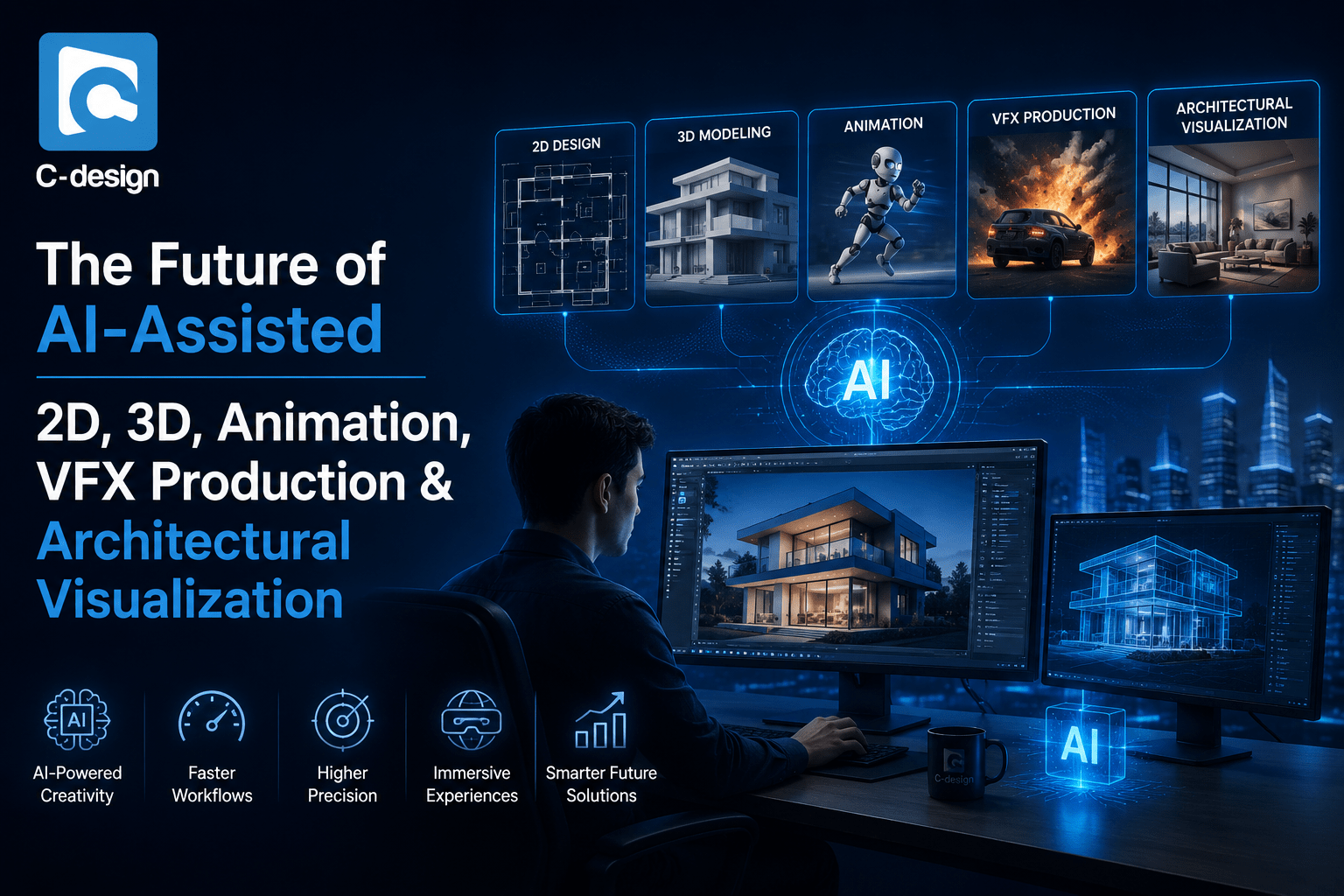
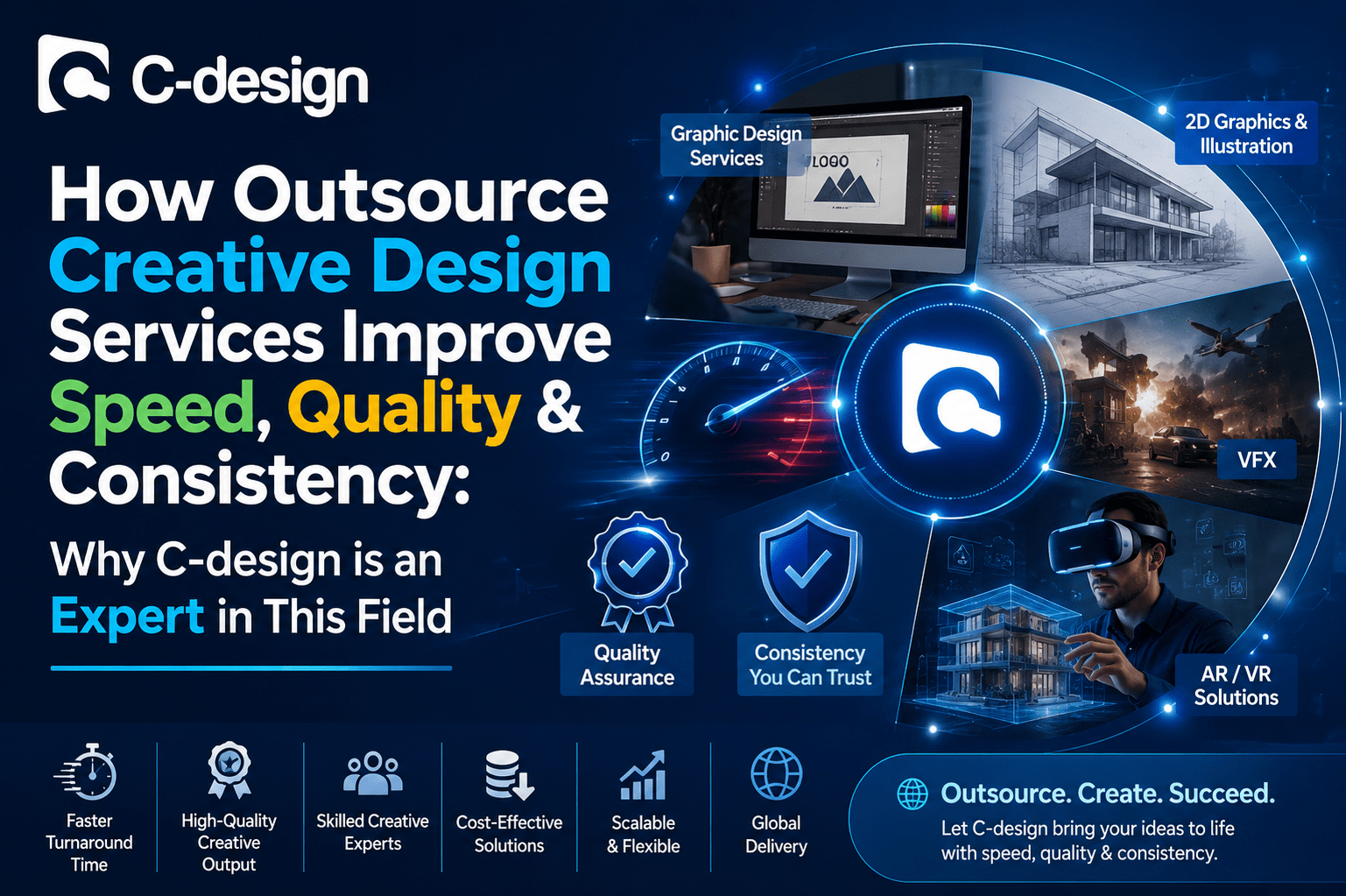
The traditional creative workflow is dead. In its place stands a hyper-accelerated, data-driven ecosystem where volume, personalization, and immersive experiences are mandatory. The catalyst for this seismic shift is Artificial Intelligence (AI), particularly generative AI, which has fundamentally redefined the landscape of Creative Services.
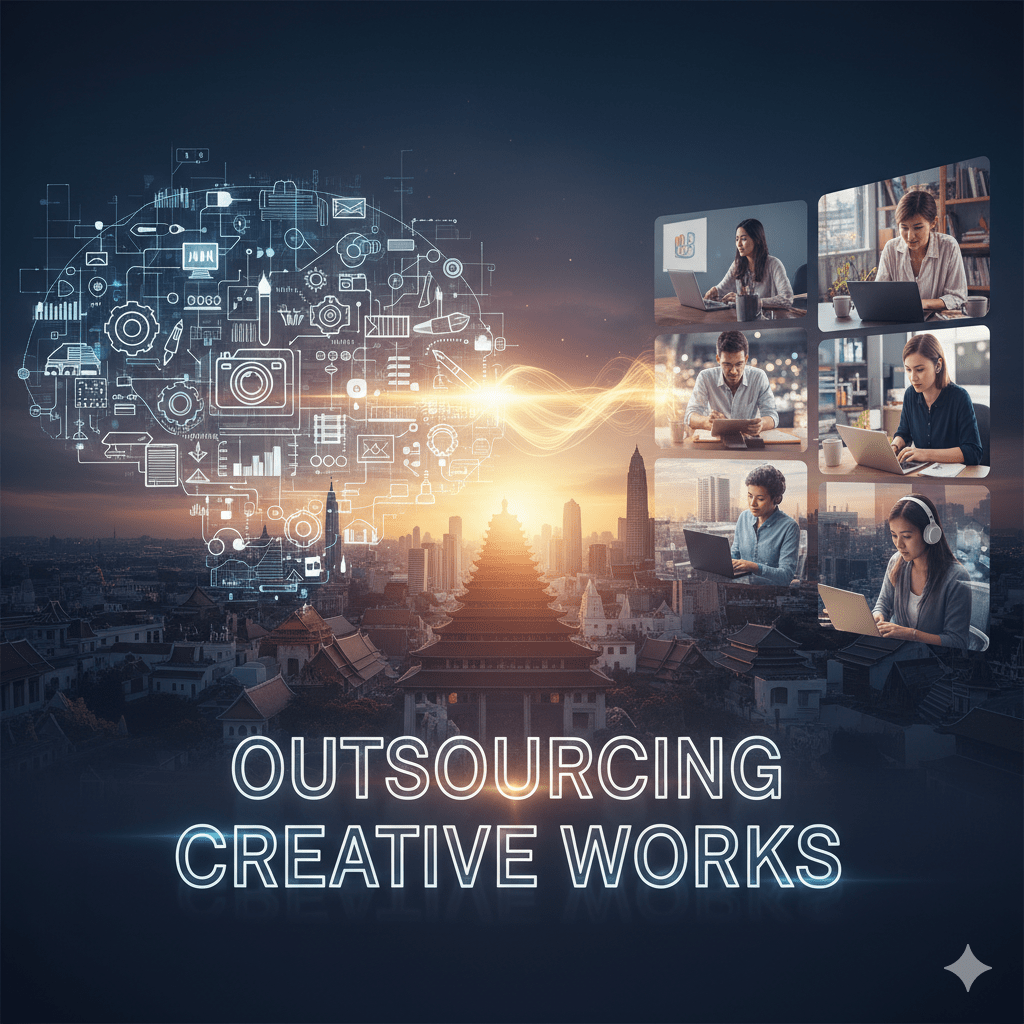
AI is not replacing the designer or marketer; it is acting as a powerful Creative Co-Pilot, automating repetitive tasks, generating endless variations for testing, and making technically demanding fields like Augmented Reality – Virtual Reality (AR/VR) accessible to a broader market.
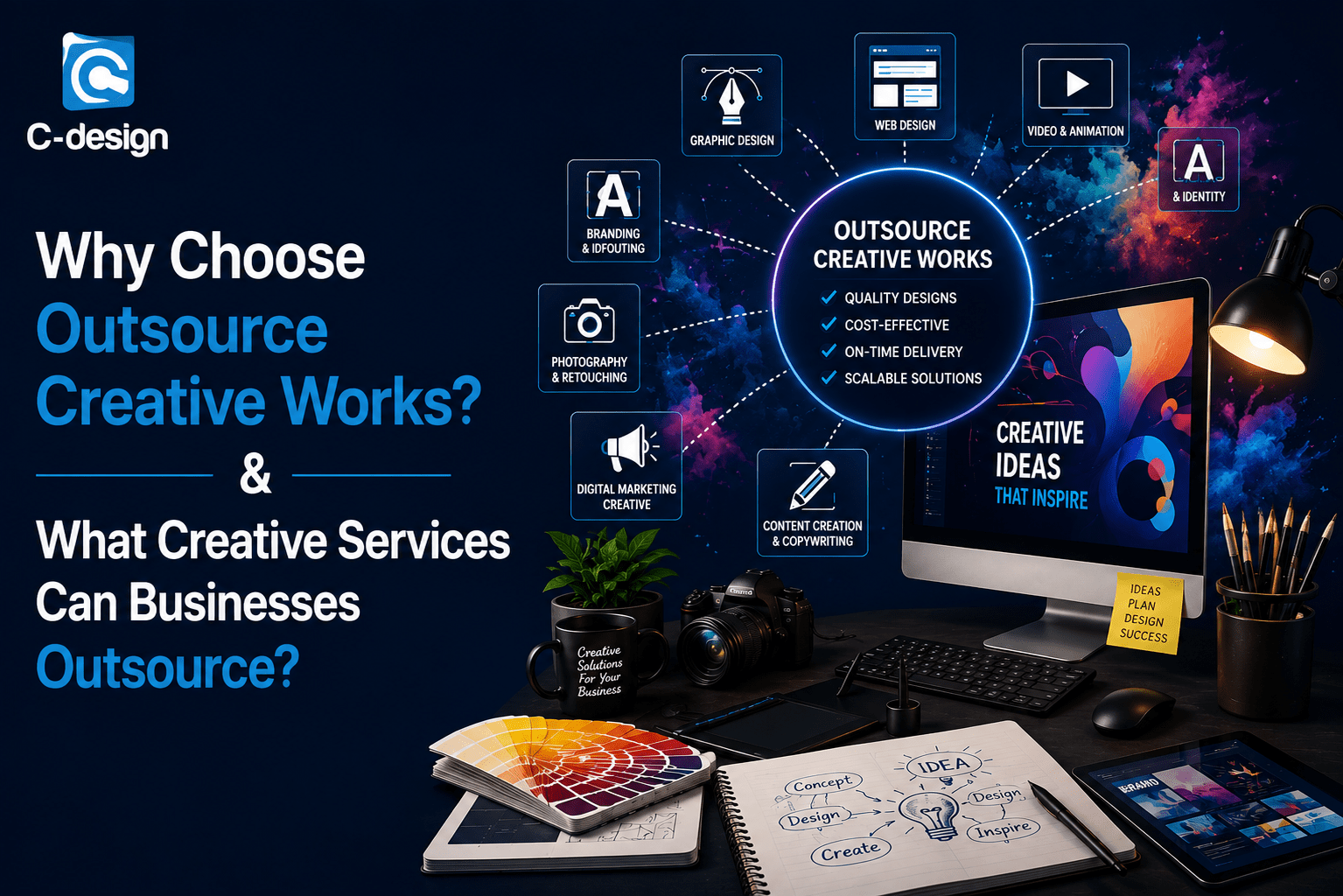
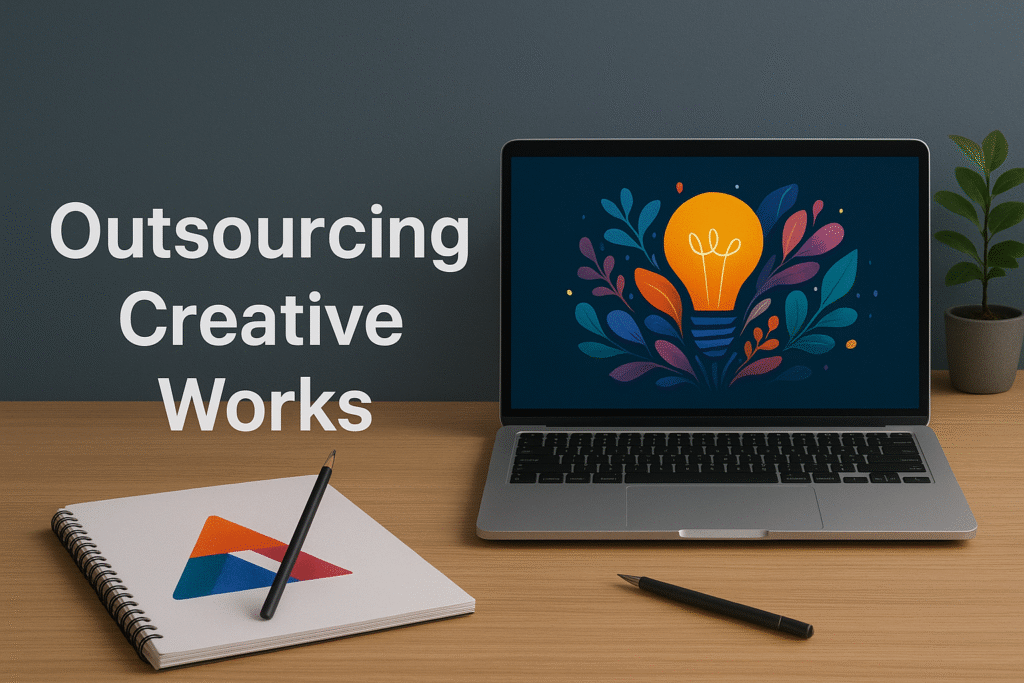
For businesses aiming for scale, speed, and competitive advantage, the path forward is clear: integrate AI, and crucially, partner with specialized vendors who can effectively execute AI-augmented projects. This is why strategic Outsource creative services are more vital than ever, transforming from labor arbitrage to intelligent, technology-driven partnerships.
I. The AI Revolution in Content Production: Speed and Scale
The biggest immediate impact of AI is the radical acceleration of the content supply chain, allowing brands to achieve personalization at a scale previously unimaginable.
1. High-Velocity, Hyper-Personalized Content
In performance marketing, success hinges on A/B testing hundreds of creative variations. AI makes this possible.
- Automation of Variation: Generative AI tools (like those from Adobe Firefly or Google Ads) can quickly generate hundreds of slight variations of a single ad creative—changing backgrounds, adjusting color palettes, localizing text, or switching model poses—all based on data insights about what historically drives clicks.
- Scale Without Burnout: This allows brands to run vast, highly personalized campaigns targeting micro-segments of an audience without crushing the internal team under a mountain of repetitive production work. By delegating this high-volume work to Outsource creative works partners equipped with proprietary AI models, brands maintain quality while maximizing testing velocity.
2. Streamlining 2D Graphics & Illustration Workflows
For routine visual assets, AI is eliminating manual drudgery, freeing up human artists for concept and final polish.
- Intelligent Asset Generation: AI can turn simple text prompts into production-ready 2D Graphics & Illustration, mood boards, or visual concepts in seconds. Tools can automatically resize, crop, and re-format a master image for every social media platform, display network, and email banner required.
- Automated Production Tasks: Mundane tasks in 2D Services, such as background removal, complex rotoscoping (drawing a mask around an object in video, often needed for VFX), and image upscaling, are now handled instantly by AI. This saves hundreds of hours of manual labor, ensuring the final deliverable from the Outsource creative design services partner is faster and cheaper.
3. The Generative Power in Storyboarding and Ideation
AI has become an essential brainstorming tool, acting as an “ideation multiplier” for designers.
- Rapid Prototyping: Creative directors use AI to rapidly visualize abstract concepts or complex scenarios. Instead of spending a day sketching, they can generate multiple visual approaches for a video or marketing campaign in minutes, allowing them to quickly evaluate ideas before committing to full production.
- Bridging the Gap: This allows Creative Services teams to jump directly from a rough concept to a high-fidelity visual prototype, improving internal communication and speeding up client approvals.
II. AI’s Impact on Immersive and Technical Creative Fields
AI is lowering the barrier to entry for highly technical fields like VFX and AR/VR, making them essential components of mainstream marketing.
4. Revolutionizing VFX Workflows
Visual Effects (VFX) traditionally required massive budgets and specialized teams for tasks like motion tracking and composting. AI is democratizing this.
- Automatic Rotoscoping and Tracking: Tools like Runway ML and Autodesk Flow Studio use AI to automatically track objects, separate foreground from background, and generate clean plates for compositing. This automates tasks that were previously the most time-consuming and expensive part of a VFX project.
- Synthetic Media Creation: AI can generate realistic video and animation from text or existing footage. This is being leveraged by Outsource creative services partners to create high-quality social media video content, explainer videos, and hyper-realistic product visualizations at a fraction of the cost and time of traditional 3D/VFX pipelines.
5. Democratizing Augmented Reality – Virtual Reality Content
The most significant barrier to Augmented Reality – Virtual Reality (AR/VR) adoption was the sheer time and skill needed to create performance-optimized 3D models. AI solves this.
- AI-Generated Environments: In VR content creation (for training simulations or virtual showrooms), AI can now generate vast, detailed 3D environments, including textures, lighting, and ambient assets, reducing the need for extensive manual work by 3D artists.
- Simplified Optimization: AI tools assist in retopology—the process of reducing the polygon count of high-detail models without sacrificing visual quality. This is critical for making models lightweight enough for real-time mobile AR applications (like virtual try-ons or e-commerce AR) and is a specialized skill now being heavily integrated into Outsource creative works pipelines.
6. Enhancing Realism through Data-Driven Texturing
The quality of a digital asset is defined by its materials. AI is making photorealism more accessible and consistent.
- Intelligent Material Creation: AI-powered tools can analyze an image of a real-world material (fabric, wood, metal) and instantly generate the complete set of PBR (Physically Based Rendering) texture maps required for 3D modeling.
- Consistency at Scale: For brands with massive digital product catalogs, Outsource creative services use AI to ensure every product maintains perfect material consistency and quality across all assets, from 3D Rendering to AR/VR models.
III. The Strategic Role of Outsource Creative Services in the AI Era
AI does not negate the need for outsourcing; it fundamentally changes the value proposition of the Outsource creative design services partner. The relationship pivots from labor supplier to technology integrator.
7. Strategic Integration of Custom AI Workflows
The challenge for businesses is not accessing AI, but integrating it into their complex brand guidelines and existing production tools.
- Brand-Specific Models: Expert Outsource creative works partners train proprietary, custom AI models on the client’s existing brand assets, style guides, and successful campaign data. This ensures that the high-volume, AI-generated content is always “on-brand” and meets specific quality standards, overcoming the generic output often associated with public AI tools.
- Seamless Pipeline Integration: Outsourcing partners act as the critical bridge, integrating the latest AI tools into the client’s marketing tech stack, providing a secure, high-volume production pipeline without the client needing to invest in the underlying infrastructure.
8. Maintaining Human Oversight and Creative Vision
Despite the automation, human intelligence remains the most critical factor. AI is a tool, not a director.
- The Human as Curator: The role of the human creative shifts from execution to curation and strategic direction. The outsourced creative team focuses on providing the precise human oversight, crafting the perfect prompt, iterating on the AI’s output, and injecting the emotional intelligence and cultural context that AI still lacks.
- Ethical AI Use: Outsource creative services partners take on the responsibility of managing the ethical use of AI, ensuring transparency, auditing outputs for bias, and navigating complex intellectual property issues related to generative content, protecting the client from legal and reputational risks.
9. Maximizing ROI and Reducing Time-to-Market
AI-driven outsourcing delivers measurable financial and operational advantages.
- Cost Efficiency: By automating 33% to 70% of production-heavy tasks (like creating 2D Graphics & Illustration variants or basic VFX masking), AI-augmented outsourcing significantly reduces the cost per asset.
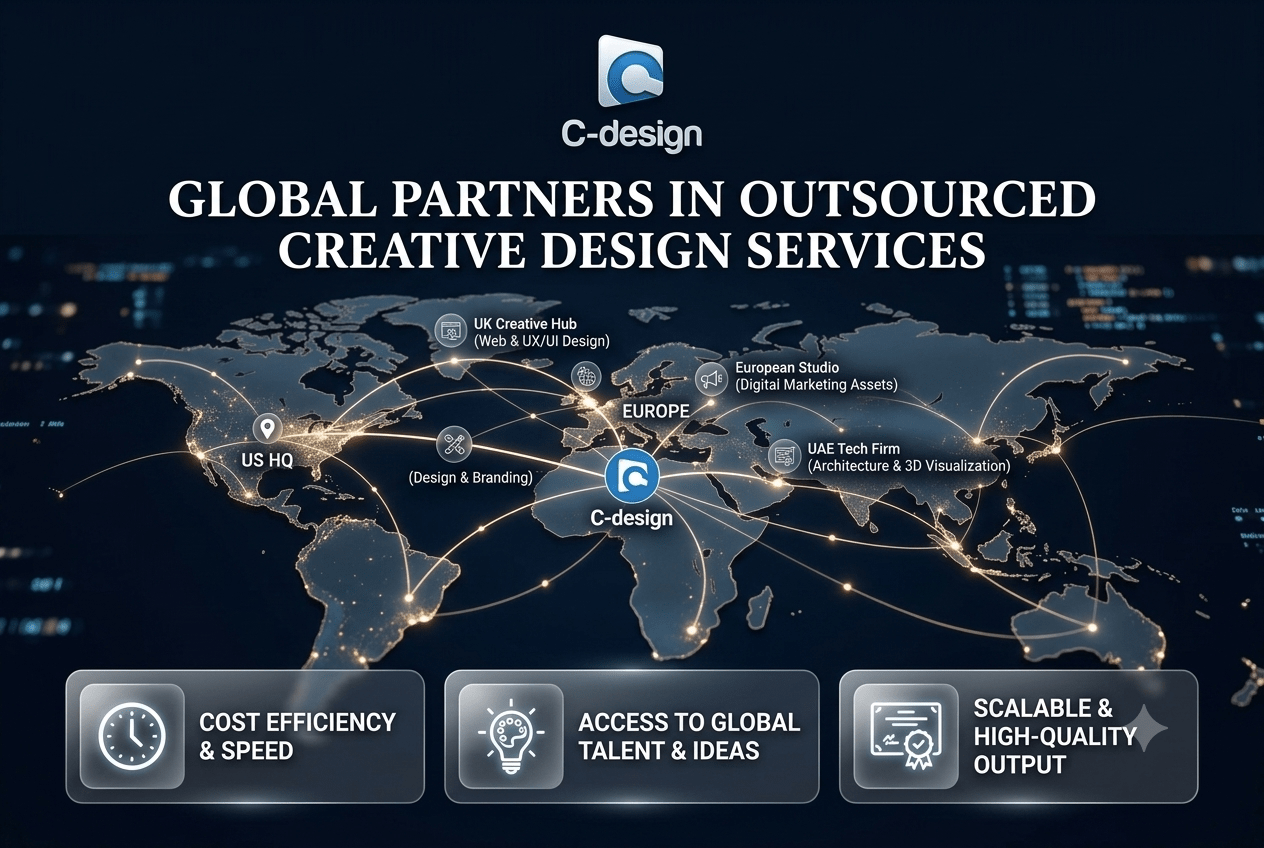
- Competitive Speed: The blend of AI speed and the 24/7 global Outsource creative services workflow ensures that brands can launch, test, and adapt campaigns faster than competitors relying solely on traditional in-house models.
Conclusion: The Era of Intelligent Creative Services
The transformation of Creative Services by AI is not a future prospect; it is the current operational reality. In 2026, the competitive edge belongs to the firms that recognize AI’s role as a creative accelerator, not a simple cost-cutter.
By embracing strategic Outsource creative design services, businesses gain instant access to AI-powered pipelines that enable hyper-personalization, master complex technical domains like VFX and Augmented Reality – Virtual Reality modeling, and maintain a focus on core brand strategy. AI has redefined the job of Outsource creative works—it is no longer about doing things cheaper, but about doing things smarter, faster, and at a scale previously deemed impossible.
❓ Frequently Asked Questions (FAQ)
1. What is the main role of AI in high-volume 2D Services?
The main role is automation and scalability. AI instantly handles repetitive tasks like image resizing, background removal, color correction, and generating thousands of design variants (Dynamic Creative Optimization), dramatically accelerating the production of 2D Graphics & Illustration for marketing campaigns.
2. How does AI transform Outsource creative works from a cost-saving tool?
AI transforms outsourcing by offering intelligence and speed. Partners now use AI tools to provide specialized services (like AR/VR optimization or VFX automation) and data-driven insights, making the partnership a source of high-quality, high-speed, and strategic creative production, not just lower labor costs.
3. Is AI replacing VFX artists?
No, AI is augmenting VFX artists. AI automates the most time-consuming technical tasks, such as rotoscoping (frame-by-frame isolation of objects) and masking. This frees VFX artists to focus their time on complex simulations, artistic direction, and high-value creative problem-solving.
4. How does AI help with Augmented Reality – Virtual Reality (AR/VR) Outsourcing workflows?
AI accelerates the creation of AR/VR assets by generating 3D models and PBR textures from simple inputs and by automatically optimizing these models (reducing polygon count and generating LODs) to ensure they perform smoothly in real-time mobile AR/VR environments.
5. What are “brand-compliant Creative Services” enabled by AI?
These are Creative Services assets that are automatically audited by AI against a brand’s specific guidelines (color codes, logo placement, typography). AI flags deviations instantly, ensuring all outsourced 2D Services are perfectly consistent with the brand identity before delivery.
6. What is the human designer’s main focus when working with AI?
The human designer’s main focus shifts from execution to strategy, prompt engineering, and curation. They set the creative vision, define the parameters for the AI, and then use their judgment and taste to select, refine, and apply the final polish to the AI-generated outputs.
Related Blogs
Art assets in different styles like 2D art for interactive applications, Games, and UI. We are having more than 15 years of experience