How AI Tools are Enhancing the Quality of Outsourced Creative Work
Posted on : Nov 28, 2025
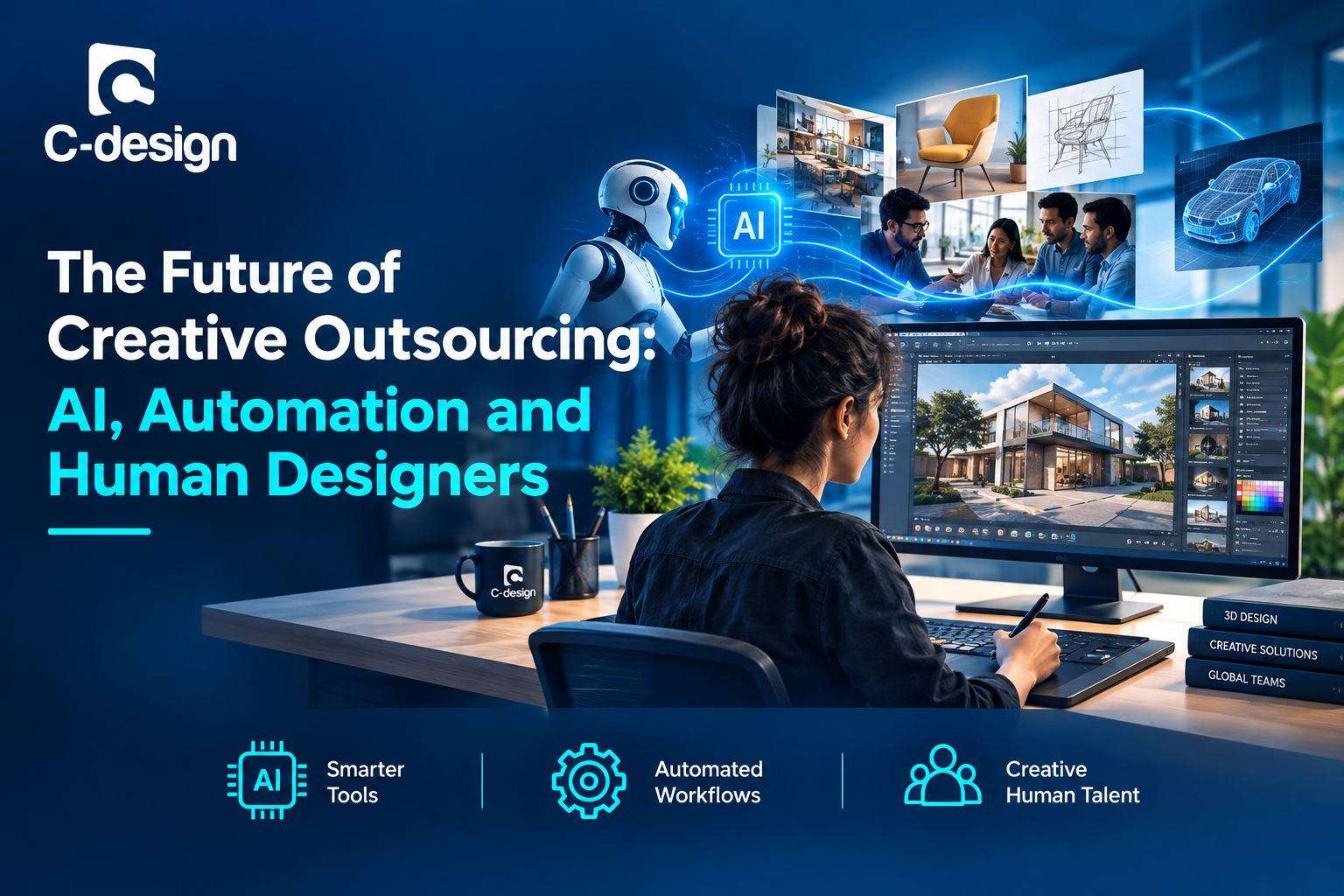
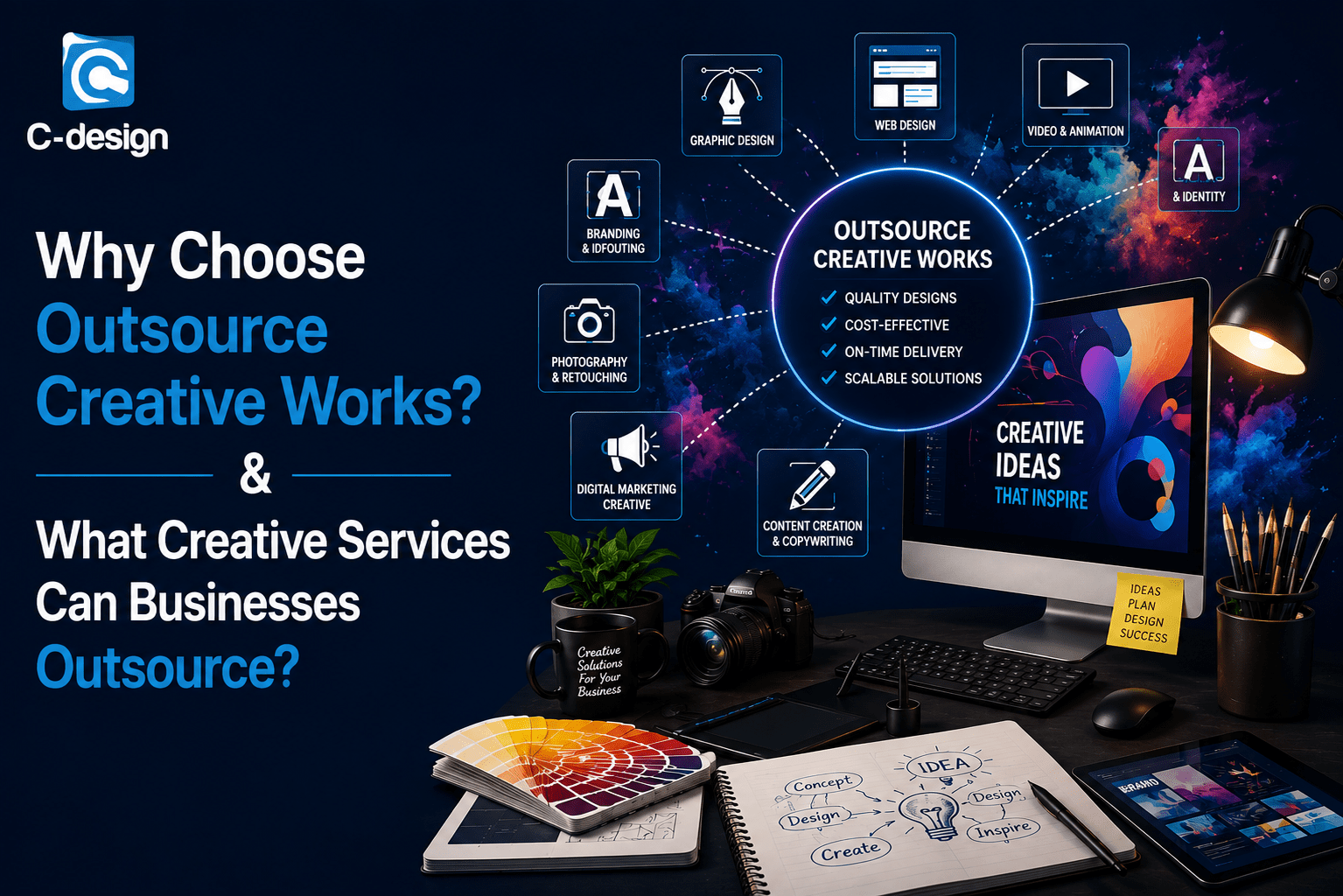
For decades, the strategic decision to Outsource creative services was predominantly driven by efficiency and cost reduction. While these factors remain critical, the conversation has fundamentally shifted. Today, the next-generation value proposition of Outsource creative works lies in quality enhancement, a capability driven almost entirely by the integration of Artificial Intelligence (AI) tools.

AI is no longer a futuristic concept; it is a core operational reality within leading Outsource creative design services firms. By automating precision tasks and providing data-driven validation, AI elevates creative output beyond what human effort alone could achieve, delivering consistency, photorealism, and strategic relevance at unparalleled scale.
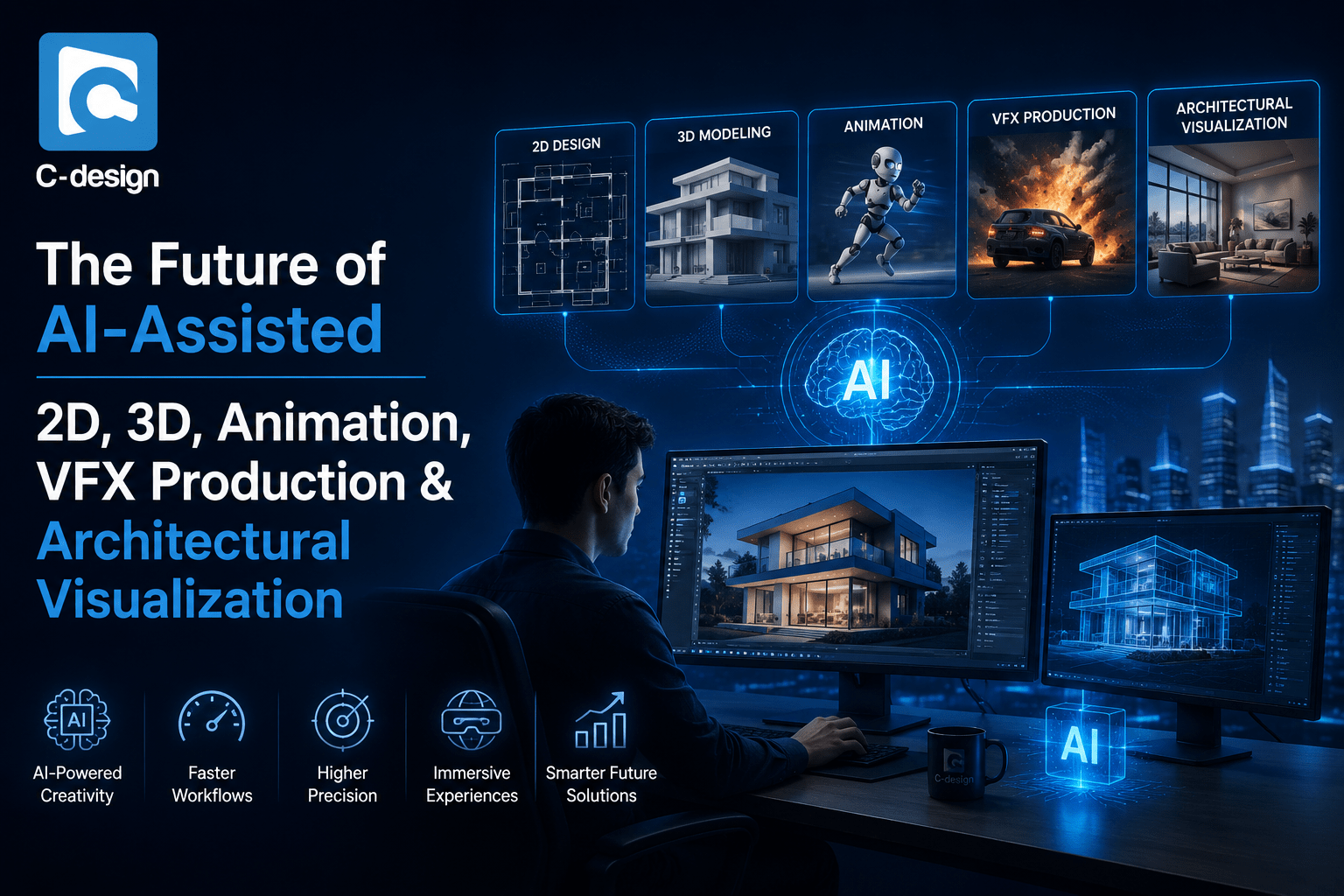
This guide explores the specific ways AI tools are redefining the quality benchmarks across 2D Services, VFX, and AR-VR production, empowering outsourced teams to deliver results that are not just faster and cheaper, but demonstrably better.
Section 1: The AI-Driven Pillars of Creative Quality ✨
The foundation of quality enhancement through AI rests on three core pillars that mitigate human error and subjectivity, leading to superior final deliverables.
1.1. Absolute Consistency and Brand Integrity
In high-volume creative production, maintaining consistency across thousands of assets is a major challenge. AI solves this with algorithmic precision:
- Brand Compliance Audit: AI algorithms are trained on a client’s specific guidelines (color hex codes, logo safe zones, tone of voice, typography). Before delivery, AI tools automatically audit every element of the Creative Services output, flagging deviations that a human reviewer might miss due to fatigue or high volume.
- Consistency at Scale: For personalized or dynamic advertising (DCO), AI ensures that millions of slightly varied 2D Graphics & Illustration pieces maintain the exact same aesthetic quality and message, preserving brand integrity across every touchpoint.
1.2. Error Reduction and Precision
AI excels at the mundane, repetitive tasks where human error is most common. This reduction in mistakes is a direct quality gain:
- Automated Quality Control (AQC): AI-powered quality control systems use computer vision to meticulously inspect visuals for defects, alignment issues, or inconsistencies in resolution. This process is faster and more reliable than manual inspection, resulting in a higher rate of flawless final assets.
- Proofreading and Fact-Checking: Beyond visuals, AI-powered tools provide high-quality proofreading, ensuring that every piece of text accompanying the Outsource creative works is grammatically flawless, enhancing clarity and professionalism.
1.3. Data-Validated Creative Decisions
The highest quality creative work is not just aesthetically pleasing; it is effective. AI provides the data to validate and refine creative decisions:
- Predictive Design: AI analyzes vast datasets of historical performance, identifying which visual elements, color palettes, or layout choices resonate most strongly with a target audience. Outsourced teams leverage this intelligence to design assets (from 2D Graphics & Illustration to video thumbnails) that are statistically optimized for conversion and engagement.
- Real-Time Feedback Loops: AI tools monitor real-time audience engagement (CTR, VTR, time on page) and feed that data back to the Outsource creative services team, enabling agile, data-driven adjustments that continuously elevate the quality of the campaign performance.
Section 2: Quality Enhancement in Core Creative Areas 🎨
AI tools are pushing the technical limits of quality in specialized creative fields, particularly in areas demanding high fidelity and complex technical execution.
2.1. The New Photorealism in 2D Graphics & Illustration
AI has democratized the creation of high-quality, unique visual assets, eliminating the reliance on generic stock libraries.
- Generative Fill and Expansion: Tools like Adobe Firefly’s Generative Fill allow artists to seamlessly add or remove complex objects, expand a composition’s canvas, or change the aspect ratio while maintaining perfect photorealistic quality and lighting consistency. This enables the 2D Graphics & Illustration artist to deliver bespoke visuals without expensive photoshoots.
- Vector and Asset Retyping: AI can take low-resolution images or static text and instantly convert them into scalable, editable vector graphics (Text to Vector Graphic in Adobe Illustrator) or identify matching fonts. This dramatically improves the technical quality and usability of legacy 2D Services assets.
- High-Fidelity Iteration: By generating hundreds of high-quality initial concepts, AI allows the human designer to invest their time only in refining the most promising ideas, ensuring the final deliverable is the absolute best of many possibilities.
2.2. Achieving Visual Excellence in VFX and Animation
VFX quality is often limited by time and budget dedicated to repetitive tasks. AI ensures that human artists focus solely on artistic finesse.
- Hyper-Accurate Rotoscoping: Traditionally, masking objects in video (rotoscoping) was tedious and error-prone. AI-powered rotoscoping leverages machine learning to automate the isolation of moving objects with pixel-perfect accuracy, eliminating the visual inconsistencies caused by manual errors. This allows the VFX artist to spend more time perfecting lighting, compositing, and creative effects, directly improving final visual quality.
- Real-Time Rendering and Pre-Visualization: AI-driven rendering engines and real-time environment creation tools (like those based on NeRF technology) allow outsourced VFX teams to visualize complex scenes instantly. This speeds up the feedback cycle and allows for more complex lighting, texture, and creative decisions to be made on the fly, leading to higher-fidelity results in the final output.
Section 3: AI and the Future of Immersive Quality (AR-VR) 🌐
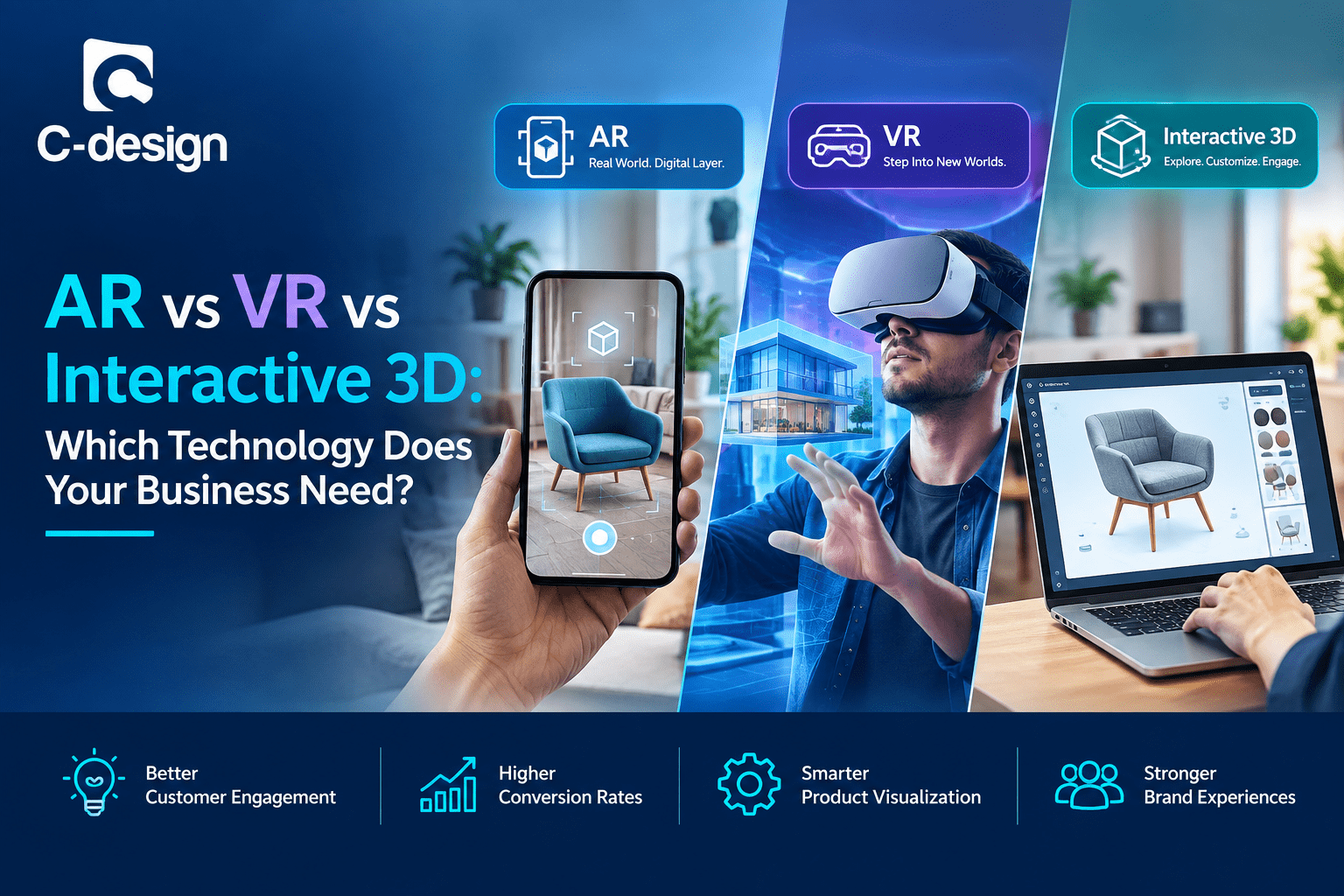
In AR-VR Outsourcing workflows, quality means flawless fusion between the digital and physical worlds. AI is the engine that achieves this photorealistic, real-time immersion.
3.1. Flawless Realism and Environmental Blending
- Object Recognition and Tracking: For AR experiences (e.g., virtual furniture placement), AI algorithms enhance quality by enabling devices to instantly and accurately recognize the user’s environment, track surfaces, and seamlessly anchor the digital model. This ensures the virtual object appears perfectly integrated, achieving the highest level of realism and immersion.
- Texture Generation and Optimization: Creating high-quality, realistic textures for 3D models is a massive time sink. Generative AI can produce sophisticated, photorealistic textures rapidly. Furthermore, AI automates the critical process of retolopogy (optimizing the polygon count), ensuring the visual quality of the Outsource creative design services model is preserved while running smoothly on mobile devices—the ultimate definition of quality in AR/VR.
3.2. Personalized and Adaptive Experiences
A key measure of quality in immersive content is relevance. AI provides the tools for dynamic personalization.
- Adaptive Content: AI analyzes a user’s behavior within a VR experience or AR application and adapts the virtual environment or narrative accordingly. This level of real-time personalization creates a more engaging, high-quality, and dynamic user experience, which is particularly valuable in training or marketing simulations delivered via AR-VR Outsourcing workflows.
Section 4: The Elevated Human Factor: Focus on Strategic Quality 🧠
The most crucial quality enhancement is the liberation of the human creative professional. By delegating the mechanical tasks, Outsource creative services partners elevate their human talent to focus on high-value, strategic quality elements.
- Conceptual Depth: Senior Creative Directors are no longer tied up reviewing basic edits or tracking brand compliance. They can dedicate their time entirely to conceptual design, emotional impact, and strategic storytelling, ensuring the creative output is not just technically flawless but strategically powerful.
- Complex Problem-Solving: AI handles the simple corrections; humans focus on the hard problems—like adapting a campaign for a new cultural market, navigating complex legal requirements, or designing a novel user interface. The human’s time is spent on the highest-quality intellectual work.
- Ethical and Brand Guardianship: While AI generates content, the human team maintains final creative control, ensuring the output is ethically sound, culturally appropriate, and perfectly aligned with the client’s long-term brand goals—the ultimate measure of strategic creative quality.
Conclusion: The Collaborative Ascent to Excellence
The integration of AI tools marks a pivotal moment in the history of Outsource creative works. The modern outsourced partner is a hybrid powerhouse, combining human imagination, strategic oversight, and AI-driven precision to redefine what “high-quality” creative truly means.
By adopting AI for consistency, data validation, and technical execution across 2D Services, VFX, and immersive media, leading firms are not just streamlining their operations; they are setting a new, higher standard for creative excellence. For any business seeking creative output that is technically flawless, strategically relevant, and competitively superior, the future lies in leveraging the AI-enhanced expertise of a dedicated partner.
To unlock this next level of creative quality and explore the power of AI-enhanced Outsource creative design services, visit https://www.outsourcecreativeworks.com/.
Frequently Asked Questions (FAQs)
1. How do AI tools guarantee consistency in outsourced creative work?
AI tools ensure consistency by acting as an automated Quality Control (AQC) layer. They are trained on brand guidelines (colors, fonts, tone) and automatically audit every asset—from 2D Graphics & Illustration to video—flagging any deviation from the client’s established brand rules before final delivery.
2. How does AI improve the visual quality of 2D Graphics & Illustration?
AI improves visual quality by automating complex image manipulation tasks like Generative Fill (seamlessly adding or removing objects) and upscaling (increasing resolution without loss of detail). This allows human designers to create unique, high-fidelity visuals without relying on generic stock photos.
3. What is the biggest quality gain from AI in VFX outsourcing?
The biggest quality gain is the elimination of human error and fatigue in repetitive tasks, particularly rotoscoping and motion tracking. AI handles these with pixel-perfect accuracy, freeing the human VFX artist to focus entirely on artistic elements like compositing and lighting for a more realistic final look.
4. How does AI enhance the realism in AR-VR Outsourcing workflows?
In AR/VR, AI enhances realism through precise Object Recognition and Tracking and by automating 3D model optimization. This ensures that virtual assets appear perfectly anchored to the real world and run smoothly on devices, which is critical for a high-quality immersive experience.
5. What does “data-validated creative” mean in the context of Outsource creative services?
It means the Creative Services output is not based on guesswork. AI analyzes performance data (CTR, conversions) to predict which creative choices (e.g., color, layout) will be most effective. The human designer then uses these data insights to make strategic choices, resulting in a higher-quality, higher-performing asset.
6. Does AI’s use reduce the need for human creative directors?
No, AI elevates them. By handling production and quality checks, AI frees up human creative directors to focus entirely on strategic quality—conceptual vision, ethical oversight, emotional storytelling, and complex problem-solving—which are the highest-value, non-automatable aspects of Outsource creative works.
Related Blogs
Art assets in different styles like 2D art for interactive applications, Games, and UI. We are having more than 15 years of experience